Monday, January 12, 2015

The Hunger Games and Machiavelli

The Hunger Games is an interesting book/movie; in both the movie and the book a girl Katniss is put up with 23 other people from the 12 districts around the country of Panem in the annual Hunger Games. In the middle of all the districts is the Capitol; the children in the Capitol don't go into a Reaping for the Games, and they are very privileged. Also in the Capitol is President Snow and the way he rules Panem is more unorthodox then regular presidents.
Niccolo di Bernardo dei Machiavelli was an Italian philosopher who came up with the theory, for leaders, to be feared more than loved. He said, " ... a prince ought to inspire fear in such a way that, if he does not win love, he avoids hatred; because he can endure very well being feared whilst he is not hated... " by this quote he means that a leader should want to be feared than love because he can not control who loves or hates him but he can control who fears him. President Snow  is in a way different then the leaders Machiavelli describe.
Machiavelli would assess Snow as a leader that would rather be feared than loved. He wants to be feared to the districts, but in the Capitol he wants them to love him. The districts rebelled against the capitol when there were 13 districts instead of just 12. In return of the rebellion the Capitol made the Hunger Games and genetic mutations in normal animals. They made Jabber-Jays to spy on people linked to the rebellion; and Tracker Jackers to sting people and make them have hallucinations. Then there is the Hunger Games, He didn't come up with the Games but he reinforces them and if anything goes wrong he punishes them. At the end of the Games the head gamemaker, Seneca Crane, lets both Katniss and Peeta live after the berry incident. Snow wasn't too happy with this, so he locked Crane in a room with the same nightlock berries and made him choose a slow starving death or eat them and die painlessly.
So in the end, President Snow got what he wanted, Seneca dead and Katniss knowing he wanted her dead as well.
Snow is an odd fellow, not like most leaders. He wants to be feared more than loved, but will do anything in his power to have the Capitol love him and praise him. He makes the districts fear him so they think they can't defeat him to keep away the idea of rebellion. So maybe Machiavelli would assess Snow the way he thinks a prince/leader should be, but Snow has some qualities that don't fully add up to Machiavelli's standards. 

Sunday, December 28, 2014

The Hunger Games and Hobbes

Thomas Hobbes was a philosopher from England; he thought up this idea of the 'state of nature.' In his book Leviathan he present the state of nature is the lack of authority, "without a common power to keep them in awe," and the lack of laws there is always going to be a perpetual state of war, "they are in that condition which is called war," and in these wars there is only to be the fittest alive in the end, "and such a war as is of every man against every man."
Also in Hobbes' state of nature statement he says there is no moral stature or right and wrong justice, "the notions of right and wrong, justice and injustice, have there no place."He said that because "... there is no common power, there is no law; where no law, no injustice." Meaning that because there is no moral duty and no right and wrong it is, in a way, acceptable. 
The Hunger Games can be argued on if it is an example of Hobbes' theory or not. I believe that the Games themselves can't support his theories. Between the tributes inside the Games it is an example because they have no authority, no laws, and are suppose to not have any morals so there can be only one victor. But all is fun in love and games, simply because they aren't fully like that. The tributes make alliances, some think they are above the rest, others like Katniss, actually have the concept of right and wrong, and knowing that this act of entertainment is wrong.
But the tributes aren't the only thing part of the Games. The Gamemakers make the Games a structured event, and are able to change the things around the tributes whenever they want. At one point Katniss was walking closer to the edge of the arena, so they built a wall of fire to push her back towards the other tributes.
Also, when they made the mutant dog to push them to fight with Cato at the end of the Games. 
Lastly to prove that The Hunger Games isn't an 
example of Hobbes' ideas, on the outside the tributes had mentors to guide them through the Games. They would gussy them up and parade them out to get sponsors. The sponsors are Capitol people and people in the districts that can get money to send things to the tributes in the arena for them to survive. 

Tuesday, December 16, 2014

The Art Behind Comedy

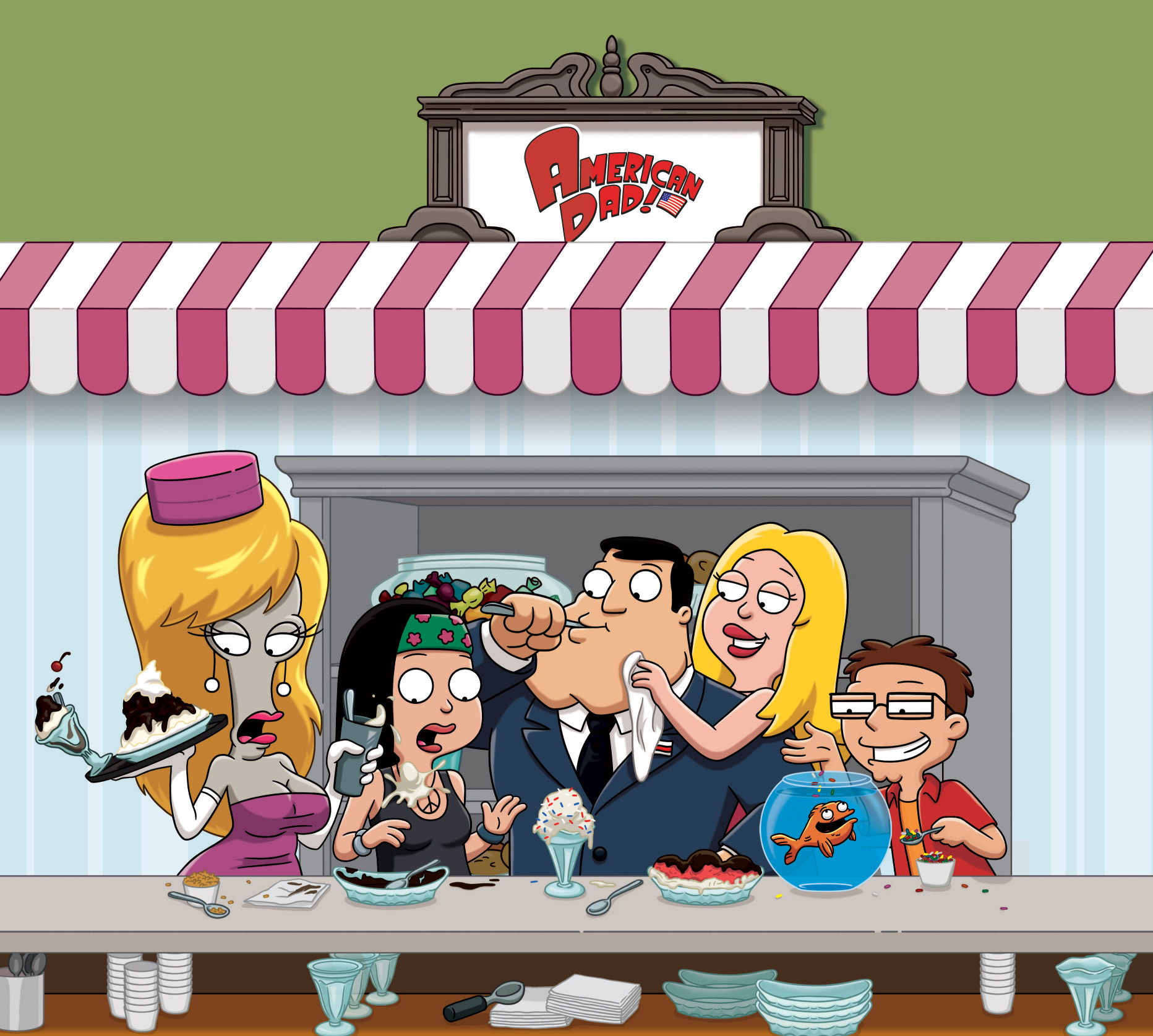
Henri Bergson came up with this idea that comedy makes antisocial situations funny and promotes moral values. An example of this is the show American Dad. In the show there is a character named Rodger. He is an alien who is suppose to be a bisexual, racist, schizophrenic because he dresses up as so many different people, he makes fun of every race, and even though he would go out with a women he prefers to make fun of the gay guys he sleeps with as well. this goes to Henri's idea because laughing at Rodgers character shows the immoral values that shouldn't be adopted into reality.


Thursday, December 4, 2014

Thanksgiving and Philosophy

Aristotle's Friendships

Aristotle had different ideas on what friendships really are. He said there were utility friends, who only are friendly when they want something and they know that they can get it; pleasurable friends, who are friends that only are there to get their own personal pleasure from it; and perfect friends, who are people that both get mutual benefits from the friendship.

Back in Peabody I had a best friend, he was the most caring person in my school and everybody was friends with him. Most of his friendships were the pleasurable friendships whether it was on his behalf or the others. But when we became friends we had nothing special to give each other to make it one sided or not. All we did when we were together was talk about what we wanted to do in life. After we shared our life accomplishing goals with one another we helped each other try and reach those goals. We kept each other on track of what we needed to do, what we couldn't do that would risk everything we already had going for us. I am thankful for having this friendship because he kept me looking forward to achieving my goal in life, and to not do anything to distract me from it. We both leaned on each other for support and stability against the troubles in our family or in our friends. It shocked me how it happened because we were completely different at first and had close to nothing in common. It was like we were a cat and a dog but we were able to withstand each other and their flaws.


Wednesday, November 12, 2014

My Hogwarts House

Ravenclaw


If I were going to Hogwarts the sorting hat would decide that I would best fit in the house of Ravenclaw. In Ravenclaw they are smart, wise, creative, and intelligent,. The traits I mostly show are the creativity, the kindness, and being smart. I believe I'm creative because I am able to make up my own dances and I am able to do a lot of artistic things that not a lot of people can do. I'm smart because even though I don't really apply myself to do the work for school I still get fairly good grades otherwise. I'm kind by smiling to people in the halls I get told I have a bubbly spirit and that makes me want to be a better person to people.


anime Ravenclaw


Wednesday, October 22, 2014

Kierkegaard's Stages

Kierkegaard said that aesthetes think they are completely free and don't have any commitment or desires, they just live with their own rules. The person in the ethical stage think that the aesthetes aren't really free because they always go by their impulses. This can be seen in the movie Journey To The Mysterious Island. In this movie the main character Sean gets a message in Morse Code from his grandfather from an undiscovered island with mysterious species on it. He thinks he can break into this building to translate the message because in the previous movie he was famous for going to the center of the earth with his uncle. Sean gets caught and his step-dad, Hank, thinks he should do something productive with his life and not think of these fantasies. Hank translates the message and they find out that the island does exists. Sean thinks he can just drop everything an go but he still has school, while Hank is the realist and says Sean needs to stay and go to school. In this situation Hank is the person in the ethical stage and Sean is the aesthete. Hank wanted Sean to get a real education and be successful and Sean wanting to go out and be an explorer like his grandfather uncle and dad.

screen title to a movie

Monday, October 20, 2014

Civil Duty

One hot summer day it was possibly 92 degrees outside. I was on my way home but I had like two more miles to walk home. I was tired and thirsty so I just wanted to get home and rest. On my way I saw a bike that was just sitting there without any lock. It was nice and yellow, it had a rack on the back to hold my backpack, so I debated on taking it so I could get home faster. I would be able to get a drink, and get food. But I knew it was wrong, so I didn't take it I sucked up the next two miles. And it was a bike too like a fast on that doesn't take much effort to go fast. Immanuel Kant thought of the term Categorical Imperative, it's pretty much when you do things that you think you would want other people to do. Kant would think that in this situation the Categorical Imperative would be if I wanted people to just take my bike if I left it unlocked.

This is a bike